
Yuki Akiyama
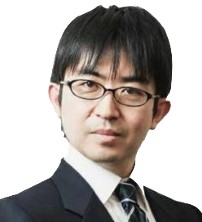
Professor, Department of Urban and Civil Engineering, Faculty of Architecture and Urban Design, Tokyo City University
Contact Info
Email : akiyamay@tcu.ac.jp
Education
Ph.D., The University of Tokyo
- 60 views
Representative Papers
Visitation-based classification of urban parks through mobile phone big data in Tokyo, Applied Geography, 167, 103300, 2024.
Examining Model Generality of Instance Segmentation for Building Mapping in Satellite Images - Case Study for Tokyo and Bangkok, IGARSS 2023 - 2023 IEEE International Geoscience and Remote Sensing Symposium, pp. 5724-5727, 2023.
T., Accuracy of vacant housing detection models: An empirical evaluation using municipal and national census datasets, Transactions in GIS, 26(7), 3003-3027, 2022.
Development of Detailed Building Distribution Map to Support Smart City Promotion -An Approach Using Satellite Image and Deep Learning-, ISPRS Ann. Photogramm. Remote Sens. Spatial Inf. Sci., X-4/W3-2022, 189-196, https://doi.org/10.5194/isprs-annals-X-4-W3-2022-189-2022, 2022.
(1) Seasonal variations of park visitor volume and park service area in Tokyo: A mixed-method approach combining big data and field observations, Urban Forestry & Urban Greening, 126973, 2021.
(2) Improving the 3D Model Accuracy with a Post-Processing Kinematic (PPK) method for UAS surveys, Geocarto International, DOI: 10.1080/10106049.2021.1882004, 2021.
(3) Delineating urban park catchment areas using mobile phone data: A case study of Tokyo, Computers, Environment and Urban Systems, 81, 101474, 2020.
(4) The Size Distribution of ‘Cities’ Delineated with a Network Theory‐based Method and Mobile Phone GPS Data, International Journal of Economic Theory, 2020, 1-13, 2020.
(5) A Detailed Method to Estimate Inter-regional Capital Flows Using Inter-firm Transaction and Person Flow Big Data, Asia-Pacific Journal of Regional Science, 4, 219–239, 2020.
(6) Estimating the Spatial Distribution of Vacant Houses using Public Municipal Data, Geospatial Technologies for Local and Regional Development, 165-183, 2020.
(7) Spatial Distribution and Relocation Potential of Isolated Dwellings in Japan Using Developed Micro Geodata,Asia-Pacific Journal of Regional Science, 3(5), 1-17, 2019
(8) Development of Micro Population Data for Each Building: Case Study in Tokyo and Bangkok, 2019 First International Conference on Smart Technology and Urban Development (STUD), 1-6, 2019.
(9) Development of Building Micro Geodata for Earthquake Damage Estimation, IGARSS 2019 Proceedings (ISBN 978-1-5386-9154-0),5528-5531, 2019.
(10) Event Detection Using Mobile Phone Mass GPS Data and Their Reliability Verification by DMSP/OLS Night light Image, ISPRS Annals of the Photogrammetry, Remote Sensing and Spatial Information Sciences, III-2, 77-84, 2016.
Research Interests
·Spatial information science
·Civil engineering (Urban and transportation analysis and management)
·Geography (Urban and commercial geography)
·Statistics
·Data science
My research is characterized by the collection, analysis, and visualization of various spatio-temporal information to understand phenomena in real space, and I am involved in many research projects related to analysis and evaluation of cities and regions and planning support. The spatial information we handle is diverse, including various open data, big data, micro-geodata, statistical information, and public data held by local governments. Processing of these data involves programming and database techniques, knowledge of various statistical analyses (clustering, AI, machine learning, deep learning, etc.), and techniques to visualize the analysis results by GIS (Geographic Information System). All of these researches are realized by analyzing various statistics and data based on the spatial statistics approach to specific issues related to cities and regions, and by developing and analyzing new data as necessary. In addition, by integrating the various data accumulated through these researches, we aim to realize a data world that can reproduce real space in digital space with as much precision as possible. Furthermore, by implementing these results for society in collaboration with private companies and local governments, we aim to quickly apply and solve various social problems in real space.
Visitation-based classification of urban parks through mobile phone big data in Tokyo, Applied Geography, 167, 103300, 2024.
Examining Model Generality of Instance Segmentation for Building Mapping in Satellite Images - Case Study for Tokyo and Bangkok, IGARSS 2023 - 2023 IEEE International Geoscience and Remote Sensing Symposium, pp. 5724-5727, 2023.
T., Accuracy of vacant housing detection models: An empirical evaluation using municipal and national census datasets, Transactions in GIS, 26(7), 3003-3027, 2022.
Development of Detailed Building Distribution Map to Support Smart City Promotion -An Approach Using Satellite Image and Deep Learning-, ISPRS Ann. Photogramm. Remote Sens. Spatial Inf. Sci., X-4/W3-2022, 189-196, https://doi.org/10.5194/isprs-annals-X-4-W3-2022-189-2022, 2022.
(1) Seasonal variations of park visitor volume and park service area in Tokyo: A mixed-method approach combining big data and field observations, Urban Forestry & Urban Greening, 126973, 2021.
(2) Improving the 3D Model Accuracy with a Post-Processing Kinematic (PPK) method for UAS surveys, Geocarto International, DOI: 10.1080/10106049.2021.1882004, 2021.
(3) Delineating urban park catchment areas using mobile phone data: A case study of Tokyo, Computers, Environment and Urban Systems, 81, 101474, 2020.
(4) The Size Distribution of ‘Cities’ Delineated with a Network Theory‐based Method and Mobile Phone GPS Data, International Journal of Economic Theory, 2020, 1-13, 2020.
(5) A Detailed Method to Estimate Inter-regional Capital Flows Using Inter-firm Transaction and Person Flow Big Data, Asia-Pacific Journal of Regional Science, 4, 219–239, 2020.
(6) Estimating the Spatial Distribution of Vacant Houses using Public Municipal Data, Geospatial Technologies for Local and Regional Development, 165-183, 2020.
(7) Spatial Distribution and Relocation Potential of Isolated Dwellings in Japan Using Developed Micro Geodata,Asia-Pacific Journal of Regional Science, 3(5), 1-17, 2019
(8) Development of Micro Population Data for Each Building: Case Study in Tokyo and Bangkok, 2019 First International Conference on Smart Technology and Urban Development (STUD), 1-6, 2019.
(9) Development of Building Micro Geodata for Earthquake Damage Estimation, IGARSS 2019 Proceedings (ISBN 978-1-5386-9154-0),5528-5531, 2019.
(10) Event Detection Using Mobile Phone Mass GPS Data and Their Reliability Verification by DMSP/OLS Night light Image, ISPRS Annals of the Photogrammetry, Remote Sensing and Spatial Information Sciences, III-2, 77-84, 2016.
Research Interests
·Spatial information science
·Civil engineering (Urban and transportation analysis and management)
·Geography (Urban and commercial geography)
·Statistics
·Data science
My research is characterized by the collection, analysis, and visualization of various spatio-temporal information to understand phenomena in real space, and I am involved in many research projects related to analysis and evaluation of cities and regions and planning support. The spatial information we handle is diverse, including various open data, big data, micro-geodata, statistical information, and public data held by local governments. Processing of these data involves programming and database techniques, knowledge of various statistical analyses (clustering, AI, machine learning, deep learning, etc.), and techniques to visualize the analysis results by GIS (Geographic Information System). All of these researches are realized by analyzing various statistics and data based on the spatial statistics approach to specific issues related to cities and regions, and by developing and analyzing new data as necessary. In addition, by integrating the various data accumulated through these researches, we aim to realize a data world that can reproduce real space in digital space with as much precision as possible. Furthermore, by implementing these results for society in collaboration with private companies and local governments, we aim to quickly apply and solve various social problems in real space.