
Promoting Development through Research, Advancing Together through Synergy: LOUD Convenes the 3rd Academic Committee Meeting
On November 15, the 2024–2025 Academic Committee Meeting of the Shanghai Key Laboratory of Urban Design and Urban Science (hereinafter referred to as the “Key Laboratory”) was successfully convened at NYU Shanghai. Distinguished experts from the committee, representing various universities and research institutions, attended the session to review the Laboratory’s annual progress report and provide constructive guidance on its future strategic direction.
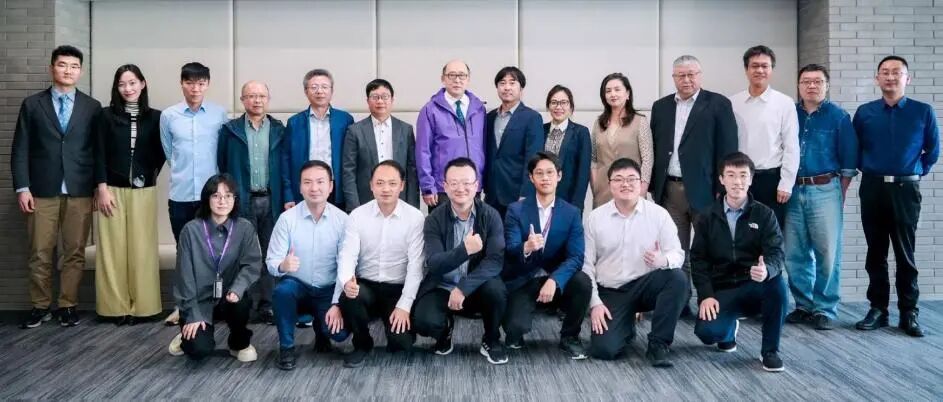
The distinguished participants included Professor Fu Bojie, Academician of the Chinese Academy of Sciences; Professor Chen Xiaoyong, former Dean of the School of Ecological and Environmental Sciences at East China Normal University (ECNU); Professor Xia Jianyang, Dean of the School of Ecological and Environmental Sciences at ECNU; Professor Chen Xuechu, Vice Dean of the School of Ecological and Environmental Sciences at ECNU; Professor Yang Xiaokang, Executive Vice President of the Artificial Intelligence Institute at Shanghai Jiao Tong University; Professor Cao Guangzhong, Vice Dean of the College of Urban and Environmental Sciences at Peking University; Professor Diao Mi of the College of Architecture and Urban Planning at Tongji University; and Professor Da Liangjun of Xi'an University of Architecture and Technology. Representing the host institution and the Laboratory were Ms. Wu Bei, Provost of NYU Shanghai; Mr. Ding Shuzhe, Vice Chancellor; Ms. Qian Anqi, Associate Provost for Research; and Professor Guan Chenghe and Professor Li Ying, Co-Founding Directors of the Key Laboratory.
Professor Li Ying delivered a comprehensive report on the Laboratory’s overall progress for the 2024–2025 period, focusing on research outputs, academic exchanges, and talent development. In May 2024, the Laboratory officially passed the inspection and acceptance by the Shanghai Municipal Science and Technology Commission, marking a significant milestone in its scientific research, organizational management, and platform construction. Guided by the mission of “Science-Driven Urban Innovation,” the Laboratory serves as a cross-disciplinary and international platform dedicated to exploring new paradigms in future urban design under the themes of digitalization and decarbonization to serve national strategies and regional sustainable development. Over the past year, the Laboratory published over 50 high-level academic papers in renowned international journals, including Scientific Data (Nature Portfolio), Communications Earth & Environment, Journal of Planning Education and Research, Landscape and Urban Planning, and Cities. Key research themes include the optimization of urban spatial structures, simulation of urban carbon emissions, resilience assessment of urban ecosystems, and the application of AI and remote sensing in urban environmental governance.
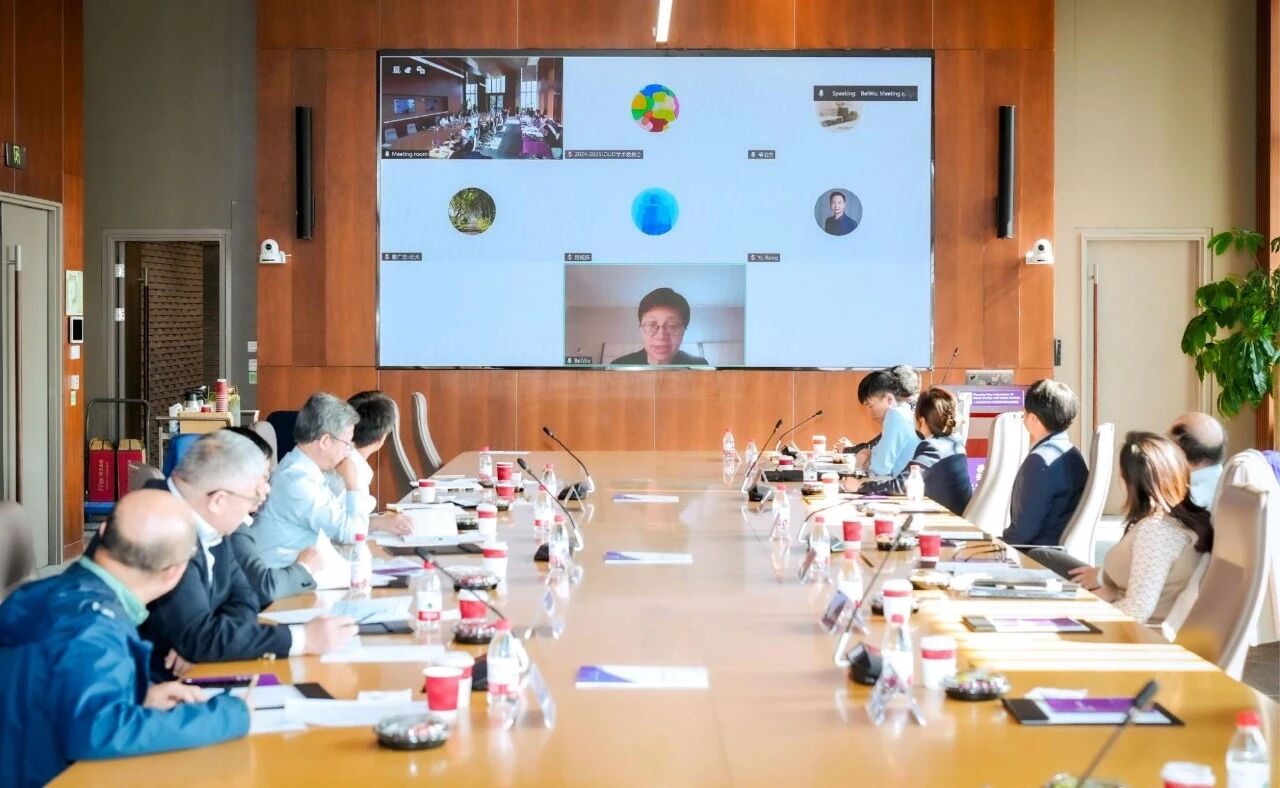
During the session, faculty members of the Key Laboratory—Assistant Professors Wang Zhaonan, Huang Kangning, and Rong Hang—presented specialized reports on “Spatiotemporal Analysis and Sustainable Planning Design for Digital Cities,” “Low-Carbon Urban Development and Simulation under Global Climate Change,” and “Application of Urban-Sensing AI in Environmentally Sensitive Blue-Green Infrastructure,” respectively. Additionally, Zhou Yichun shared updates regarding the Laboratory's postdoctoral training programs. Professor Guan Chenghe outlined the Laboratory’s development plan for the next five years, which will expand its research footprint across three core pillars: Climate Parks & Communities, Transformation of Resource-Based Cities, and Robotic Urbanization. A primary focus will be investigating Embodied Intelligence as a critical intermediary between the physical and digital worlds, particularly through robotics and Lightweight Urbanization.
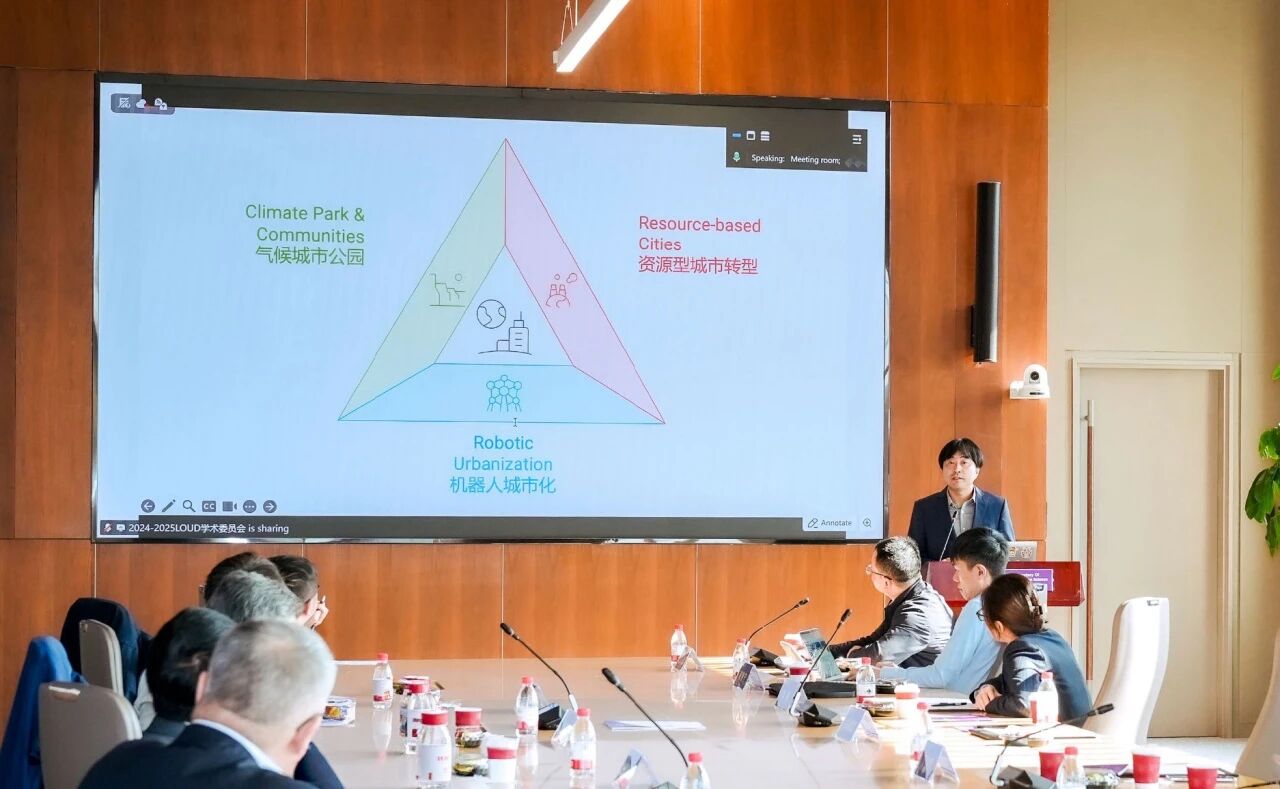
By leveraging its international network, the Laboratory aims to explore lightweight urbanization pathways—utilizing modular materials, accessible data systems, flexible governance models, and scalable infrastructure—to provide low-cost, low-carbon, and highly adaptive construction solutions for sustainable and inclusive urban growth. Furthermore, the Laboratory will strengthen its scientific research platform to enhance its influence as a technological innovation hub, utilizing the international environment of NYU Shanghai to promote talent cultivation, interdisciplinary collaboration, and global partnerships.
Provost Wu Bei underscored that the Key Laboratory is a distinguished academic flagship for NYU Shanghai and reaffirmed the university’s commitment to providing a supportive environment and a broader platform to establish the Laboratory as a leading engine for research and a frontline hub for Shanghai’s technological innovation. In the discussion session, the Academic Committee experts expressed high commendation for the Laboratory’s achievements in institutional scaling, talent cultivation, research breakthroughs, social services, and public influence. The experts encouraged the Laboratory to continue conducting forward-looking research, produce more landmark achievements, and strengthen the transformation of research findings to align more closely with the practical needs of urban development, thereby further expanding its scientific and social impact.
- 38 views