
Professor Jiangping Zhou from the University of Hong Kong Visits LOUD, Focusing on "Life between Stations" to Explore New Urban Vitality
On May 15, Professor Jiangping Zhou, Professor in the Department of Urban Planning and Design at the Faculty of Architecture, the University of Hong Kong, and Deputy Director of the Institute of Transport Studies at the University of Hong Kong, visited the Shanghai Key Laboratory of Urban Design and Urban Science (hereinafter referred to as the "LOUD Laboratory") for a specialized academic exchange. Professor ChengHe Guan and Professor Ying Li, Co-Founding Directors of the LOUD Laboratory, along with members of the laboratory team, attended the event.
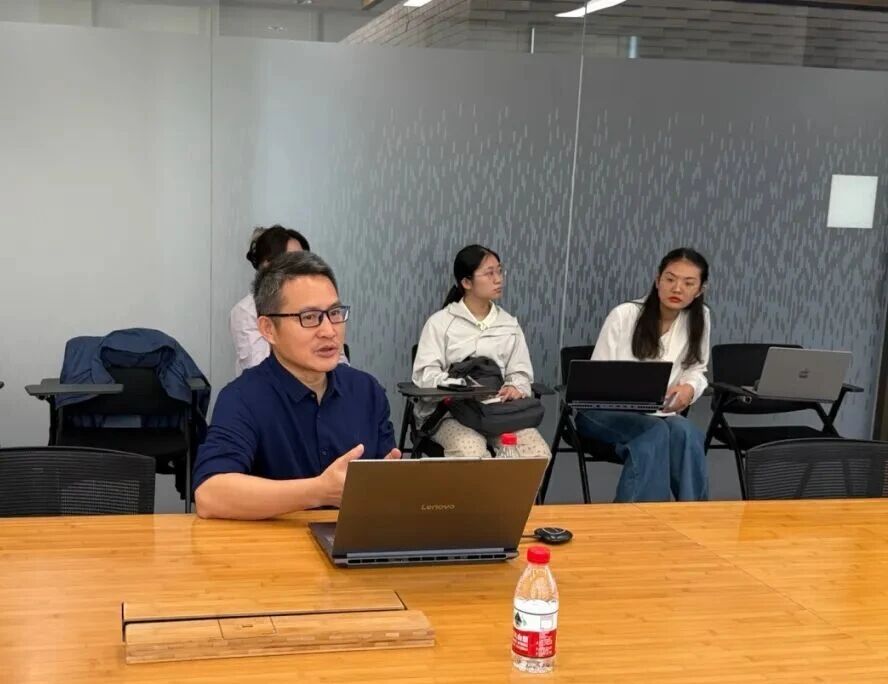
Professor Zhou has long been committed to cross-disciplinary research at the intersection of transportation systems and land use. He has innovatively integrated multi-source big data, such as mobile signaling data and smart card data, into traditional commuting analysis frameworks, thereby providing novel methodological pathways and empirical evidence for the promotion of sustainable mobility and the development of sustainable cities. Since 2020, Professor Zhou has been repeatedly selected for the Clarivate Analytics global list of Top 1% Highly Cited Researchers.
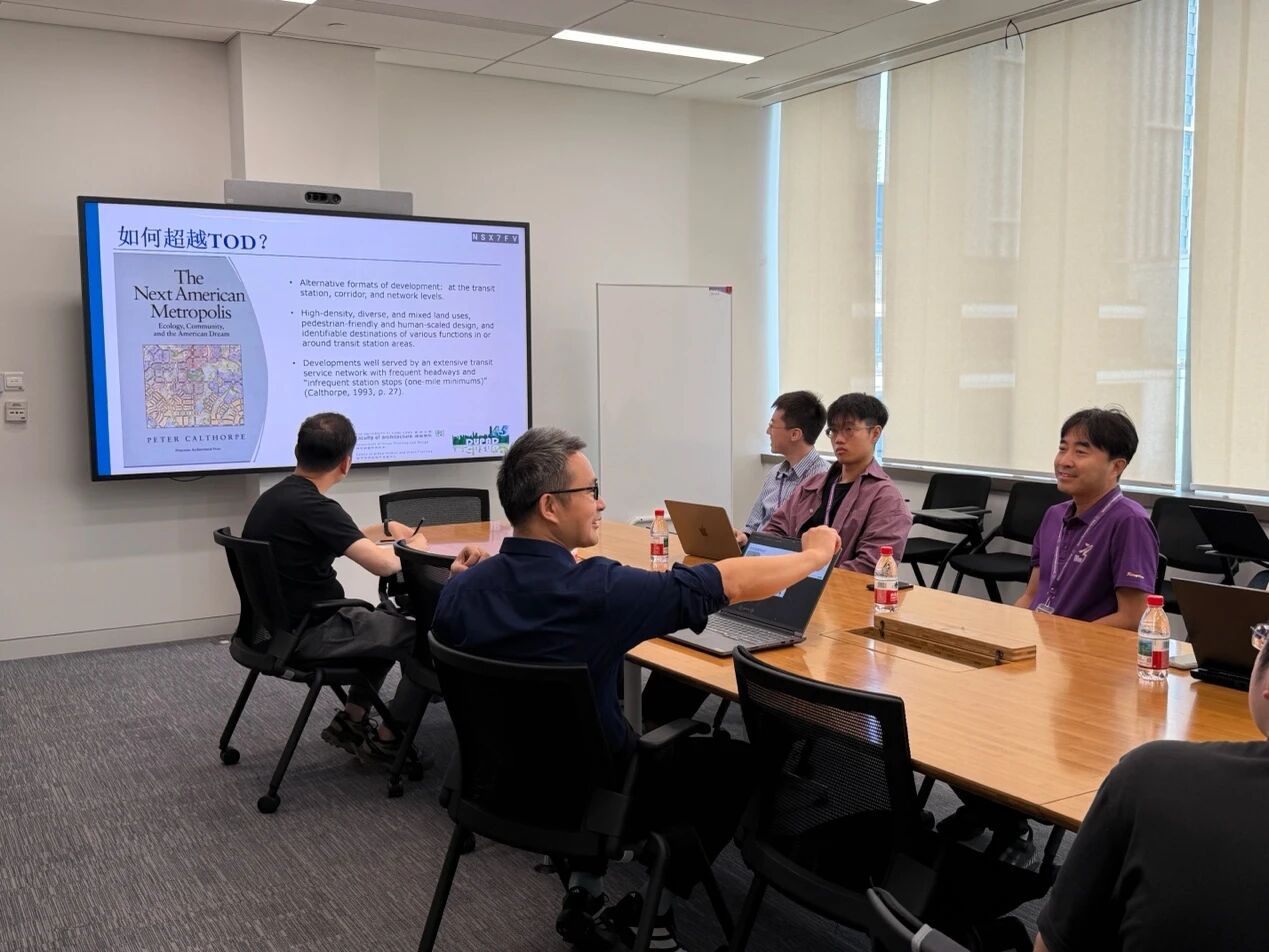
During this academic exchange, Professor Zhou delivered a lecture titled Crowd Intelligence Builds the City: Principles and Realization of User Value and Exchange Value of Spaces and Activities Between Metro Stations. Drawing upon Jan Gehl’s seminal concept of "Life Between Buildings," he extended the research perspective from traditional streets and architectural spaces to the highly fluid, linear spaces within cities—specifically, the areas between subway stations—and proposed the vital concept of "Life between Stations" (LbS). This perspective not only expands the analytical dimensions of urban public space but also refocuses attention on the serendipitous encounters and transient moments of belonging within high-frequency modern urban mobility, offering a fresh entry point for understanding contemporary urban life.
Professor Zhou systematically reviewed the limitations of the current transit-oriented development (TOD) model, noting its long-standing preoccupation with station core areas to the neglect of the linear spaces connecting these hubs. In contrast, these "spaces between stations" are precisely the vectors that accommodate the vast majority of continuous urban activities and daily mobility. Concurrently, Professor Zhou introduced his research team's latest exploratory achievement: an AI-driven automated survey system based on computer vision. This tool can efficiently and intelligently identify, categorize, and quantify human activity types and spatial environmental characteristics within linear urban public spaces, overcoming the bottlenecks of high costs and limited sample sizes inherent in traditional research methodologies.
Following the presentation, the researchers and students of the LOUD Laboratory engaged in an enthusiastic and in-depth discussion with Professor Zhou regarding the operationalization metrics of "Life between Stations," data privacy protection boundaries under multi-source big data aggregation, and policy conversion pathways for planning applications.
This exchange event further consolidated the international academic networks and collaborative momentum of the LOUD Laboratory in the domain of smart cities and big data analytics, injecting new academic insights and research impetus into the laboratory's ongoing advancement of cutting-edge data-driven urban science research.
- 55 views