
LOUD Ph.D. Student Honored with the 2025-2026 N.E.T. Research Excellence Award
Hongping Sun, a 2024 cohort Ph.D. student in Urban Ecology, has been awarded the 2025-2026 "N.E.T. Research Excellence Award." Ms. Sun serves as a Research Assistant at the Shanghai Key Laboratory of Urban Design and Urban Science (LOUD) and is a doctoral candidate within the joint training program co-established by East China Normal University and NYU Shanghai (hereinafter referred to as the "N.E.T. Program").
Leveraging the premium academic resources and international research platforms of both institutions, the N.E.T. Program aims to foster interdisciplinary graduate training and high-level scientific collaboration. The program offers graduate students opportunities for joint mentorship by NYU Shanghai faculty, thereby expanding their international research horizons and enhancing their capacity for academic innovation. To further stimulate research enthusiasm among graduate students and encourage original, cutting-edge scholarship, NYU Shanghai and East China Normal University jointly established and continue to advance the "N.E.T. Research Excellence Award."
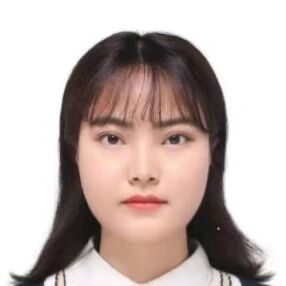
Hongping Sun Ph.D. Student in Ecology, Class of 2024
East China Normal University - NYU Shanghai Joint Graduate Program (N.E.T.)
Ms. Sun’s research focuses on the coupling mechanisms between urban thermal environmental perception and urban morphology, with a particular emphasis on how urban spatial structures, functional characteristics, and variations in local environments influence residents' perceived thermal comfort. Integrating social media big data, spatial analysis, and urban ecological methodologies, her work seeks to understand urban thermal environments through a "people-centered" lens, providing a scientific baseline for climate resilience and the optimization of livable spaces amidst rising global temperatures. Her related research has been published in the internationally renowned journal Landscape and Urban Planning.
Research Interests
"Even under identical ambient temperatures, the thermal experiences elicited by different street spaces often exhibit marked disparities. Certain spaces induce an immediate desire to leave, whereas others afford a relatively comfortable experience that encourages lingering." Rooted in long-term observations and reflections on these spatial variations in thermal perception, Ms. Sun has progressively focused her research interests on the underlying mechanisms linking urban environments to human thermal comfort. Addressing this inquiry, she utilizes text data derived from the social media platform Weibo to quantify the perceived thermal comfort of residents in Shanghai. By coupling these metrics with urban morphological indices and functional characteristics, she systematically analyzes the spatiotemporal heterogeneity and driving factors of thermal comfort perception across diverse urban spaces.
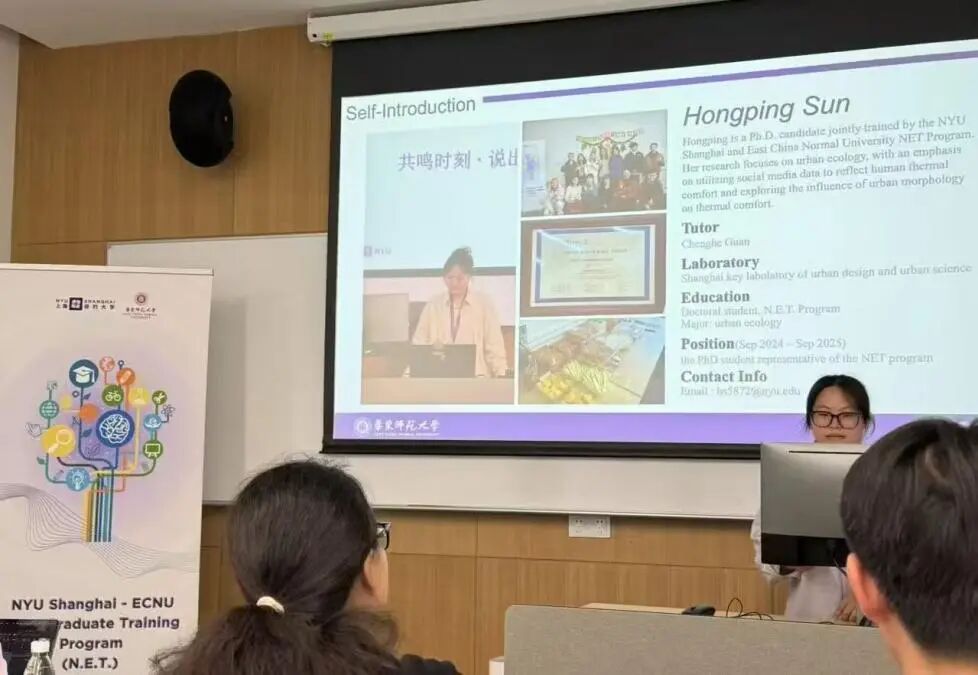
Academic Support from Mentors and the Laboratory
Reflecting on her advisor’s mentorship style, Ms. Sun remarked: "Professor Guan consistently encourages students to independently explore their research interests while continuously inspiring new academic ideas during our discussions. He emphasizes independent thinking and innovation, yet provides highly specific and effective guidance when research encounters bottlenecks. Furthermore, Professor Guan places great value on internal academic exchange and collaboration within the laboratory, frequently encouraging cross-disciplinary discussions among peers to foster collective growth in an open academic environment."
Relying on the interdisciplinary platform provided by the Shanghai Key Laboratory of Urban Design and Urban Science (LOUD), Ms. Sun has successfully conducted cross-cutting research bridging urban science, urban ecology, and spatial data analytics, thereby continuously expanding her research perspectives and methodological frameworks.
Scientific Challenges and Self-Breakthroughs
During her master’s studies, Ms. Sun’s research was oriented toward micro-level ecology. For her doctoral training, driven by academic interest, she transitioned toward the macro-scale domains of urban ecology and urban thermal environments. This paradigm shift in research subjects and spatial scales presented novel challenges, including the reconstruction of analytical frameworks, the enhancement of spatial data processing capabilities, and the systematic acquisition of programming languages and analytical methodologies.
She believes that scientific training across different academic stages is not fragmented but represents a continuous process of integration and translation. "Although the research object has shifted, the ecological thinking and scientific training accumulated during my master’s program remain invaluable. Many research methods and problem-solving perspectives can be extended and integrated into new domains, which has deepened my understanding of the significance of interdisciplinary research." Moving forward, Ms. Sun will continue her deep dive into the relationship between urban thermal environments and human perception, exploring pathways for human settlement optimization at the intersection of urban ecology and data science, thereby contributing to urban sustainable development in an era of climate change.
- 88 views