
LOUD Participates in the 2026 NYU Real Estate Global Summit: Navigating the Asset Management Era—Strategic Forecasts for Global and Emerging Markets
Editor’s Note:
Professor ChengHe Guan, Director of the Shanghai Key Laboratory of Urban Design and Urban Science (LOUD), presented development strategies for lightweight cities and blue-green infrastructure inspired by the Suzhou Creek Project. He noted that urban renewal must shift from landmark creation to network weaving, better preparing cities for the opportunities and challenges of the embodied AI era while aligning closely with national urban development policies.
The following article is from the NYU Shanghai Institute for Cities and Real Estate Emerging Markets (ICREEM). Author: NYU ICREEM.
The narrative of China’s real estate industry is undergoing a historic inflection point, shifting from incremental development to value discovery, precision operations, and long-term capital logic within stock assets. In this new paradigm, "asset management capability" has superseded "development scale" as the new competitive barrier and valuation anchor. To address this evolving landscape, the 2026 NYU Real Estate Global Summit, themed Navigating the Asset Management Era—Strategic Forecasts for Global and Emerging Markets, commenced on the afternoon of May 19 at the Qiantan Campus of NYU Shanghai. Jointly hosted by the NYU Shanghai Institute for Cities and Real Estate Emerging Markets (ICREEM) and the NYU Schack Institute of Real Estate, the summit focused on core agendas including value discovery in the stock era, urban renewal, REIT innovation, and the convergence of digital and green technologies. The event convened top-tier global asset management institutions, investment banks, developers, academic think tanks, and industry pioneers to deliberate on the profound transformation from development to operations.
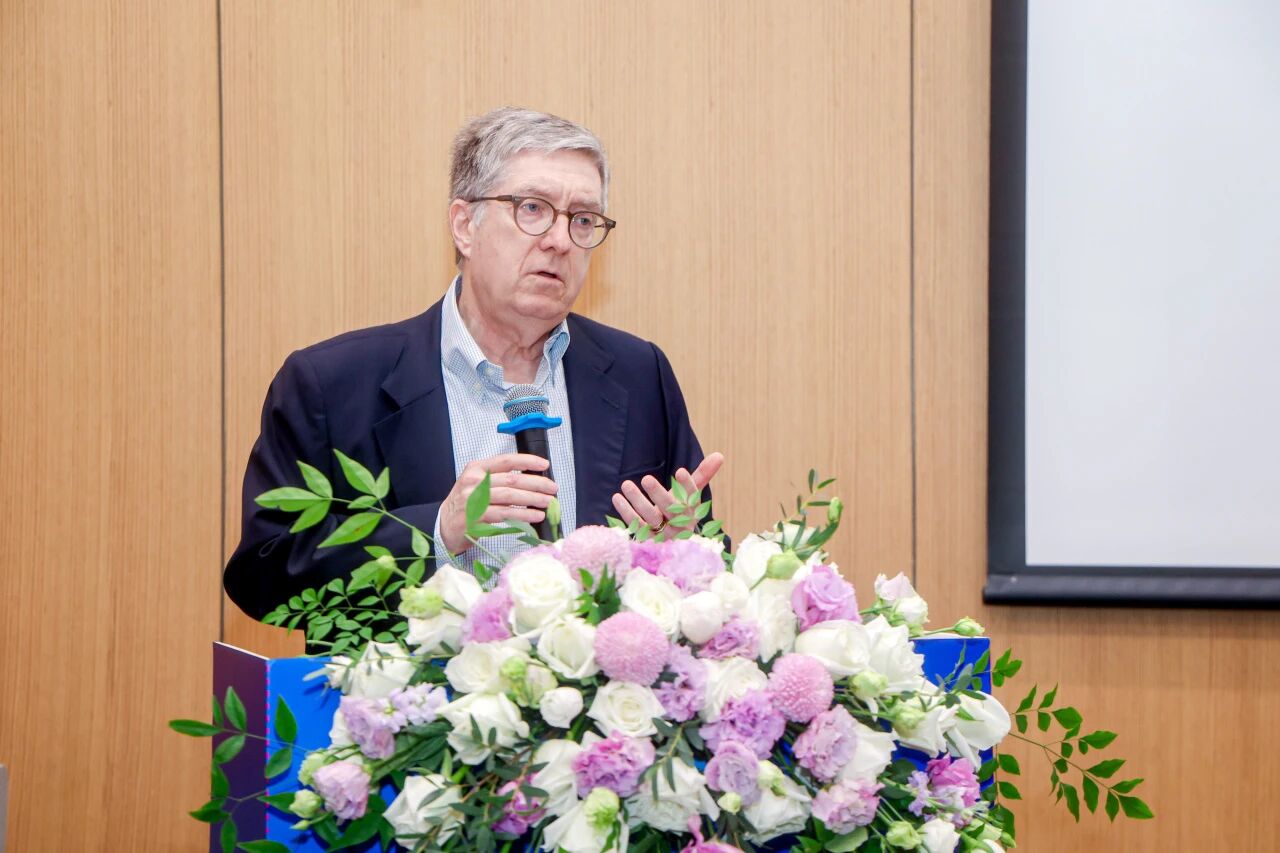
Jeffrey Lehman, Vice Chancellor of NYU Shanghai
From the dual perspectives of cross-cultural education and global urbanism, Vice Chancellor Jeffrey Lehman underscored NYU Shanghai’s pivotal role as a nexus connecting China with global knowledge networks. He remarked that the next chapter of real estate inherently demands interdisciplinary synthesis—bridging not only finance and engineering but also urban science, data governance, and social sustainability.
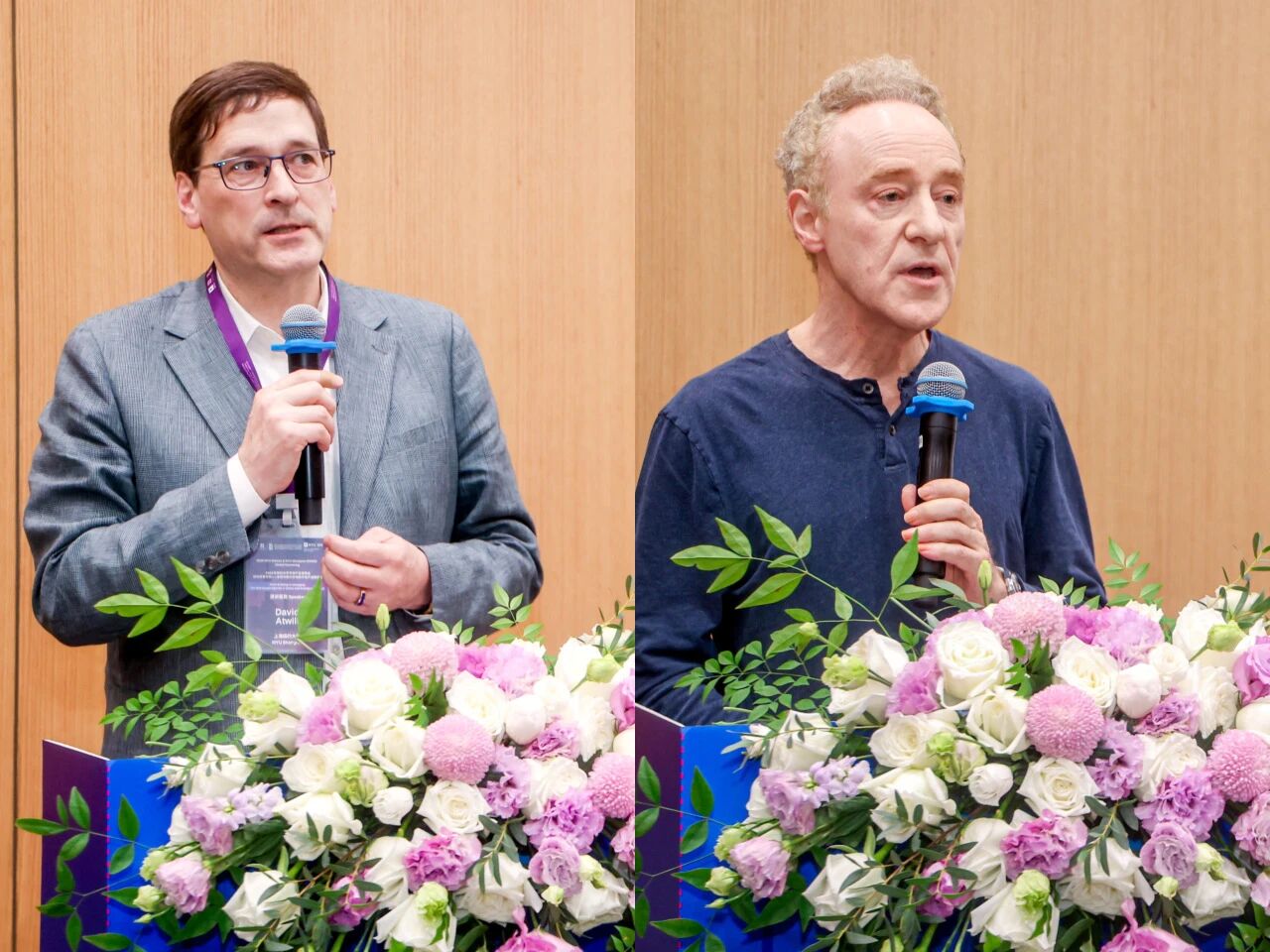
Left: Professor David Atwill, Dean of Arts and Sciences and Professor of History, NYU Shanghai
Right: Professor Adam Brandenburger, Director of the Creativity and Innovation Program and Area Head of Economics, NYU Shanghai
The summit featured special opening remarks from Professor David Atwill and Professor Adam Brandenburger. Professor Atwill reminded practitioners that cities are never merely physical spaces; they function as vessels of social memory. He prompted the audience to consider what has been lost during the rapid development of the past forty years, noting that while the "Asset Management Era" appears to be a financial term, its core essence remains a responsibility toward people—a historical proposition that this generation of practitioners must answer. From an economic perspective, Professor Brandenburger precisely illustrated the shift in core logic during the asset management era. The industry is entering a new phase driven by creativity; those who can infuse cold infrastructure with irreplaceable creativity will secure a ticket to the next stage.
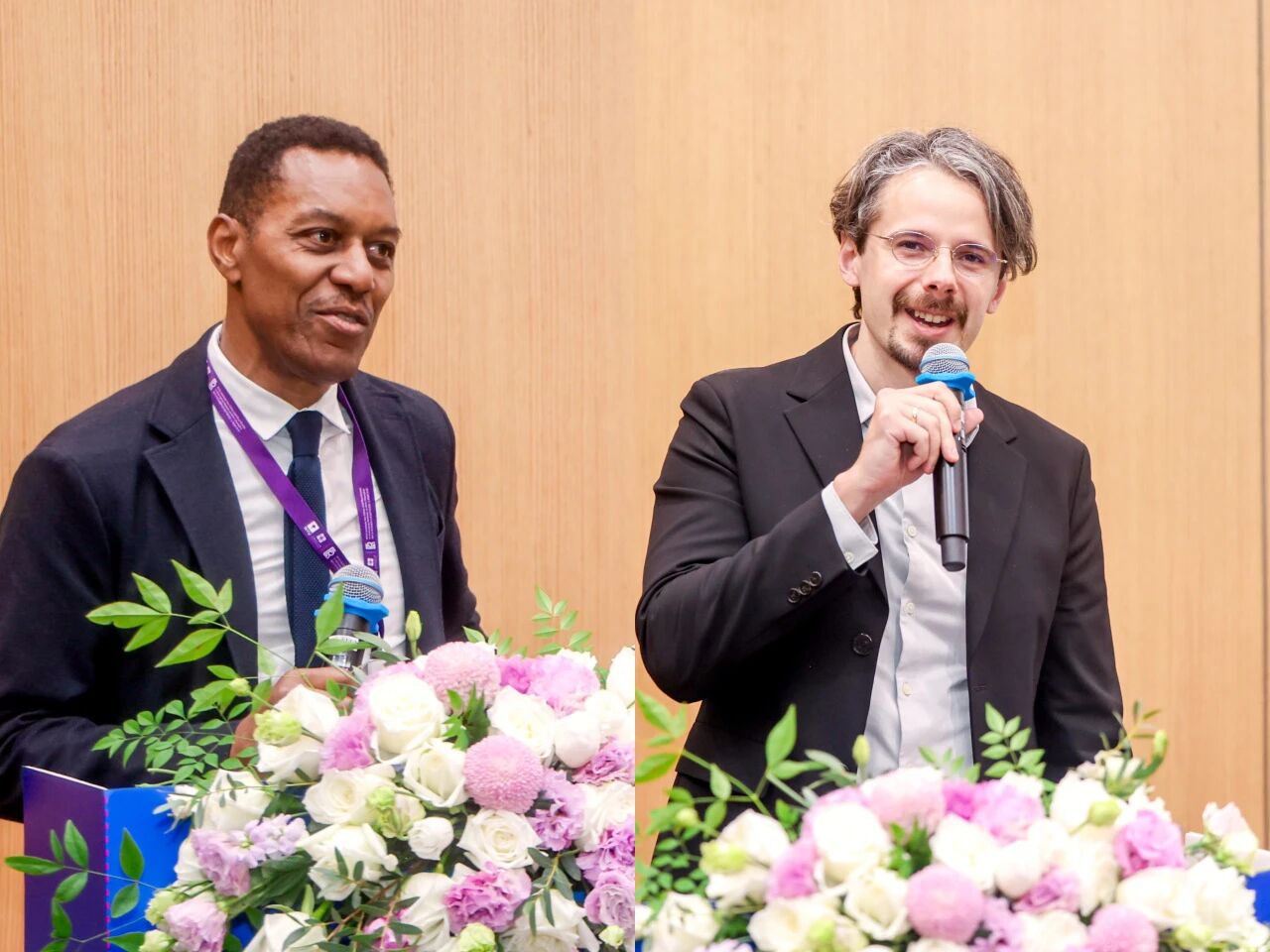
Left: Marc Norman, Dean of the NYU Schack Institute of Real Estate
Right: Aleksandar Stojanovic, Director of the NYU Shanghai Institute for Cities and Real Estate Emerging Markets (ICREEM)
The leaders of the co-hosting institutions shared profound industry insights and pragmatic collaborative visions. Marc Norman, Dean of the NYU Schack Institute of Real Estate, reflected on his experiences leading students on field studies across major Chinese cities, noting: "The scale and complexity of the Chinese market are unparalleled. To understand China’s transition toward stock assets is to understand the next decade of global real estate." He also announced that starting in the Fall of 2026, NYU Shanghai students can formally enroll in the NYU Real Estate Minor, a joint initiative aimed at cultivating the next generation of asset management talents armed with both Chinese insights and global perspectives. Aleksandar Stojanovic, Director of ICREEM, further emphasized that the institute is dedicated to focusing on emerging markets characterized by the fastest changes, greatest challenges, and most abundant opportunities. In his remarks, he expressed hope that the deliberations would consolidate collective wisdom to provide sustained momentum for the profound structural transformation from development to asset management.
Panel Discussion Review
Urban Renewal: Spatial Reconstruction and Experiential Value Creation
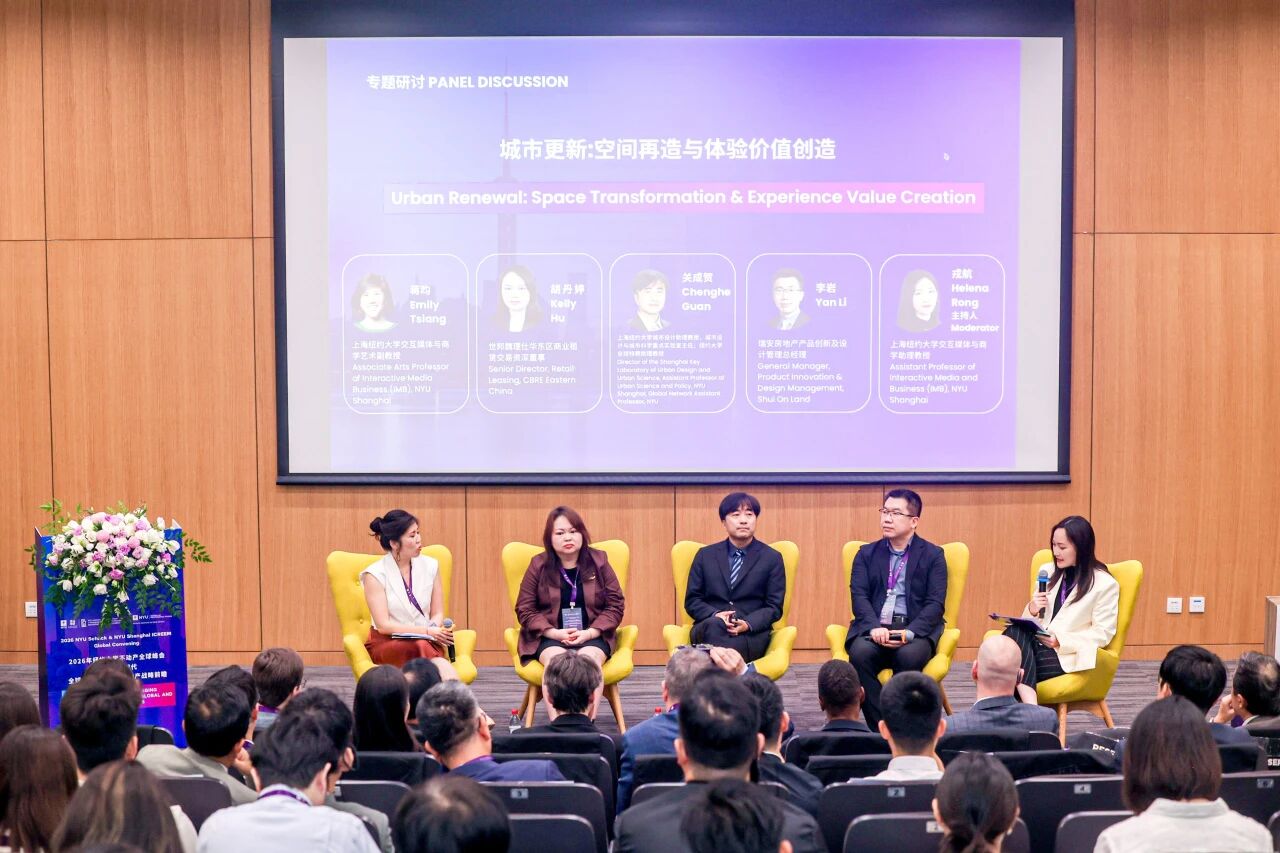
From left to right: Emily Tsiang, Danting Hu, ChengHe Guan, Yan Li, Hang Rong
As the era of massive demolition and reconstruction concludes, urban renewal is shifting from physical modifications to "scenario recreation." Moderated by Hang Jung, Assistant Professor of Interactive Media and Business at NYU Shanghai, this panel brought together urban designers, commercial experts, and developer representatives. Professor ChengHe Guan, Director of the Shanghai Key Laboratory of Urban Design and Urban Science (LOUD), introduced development strategies for lightweight cities and blue-green infrastructure inspired by the Suzhou Creek Project. He pointed out that urban renewal should transition from landmark creation to network weaving, thereby better embracing the opportunities and addressing the challenges of cities in the era of embodied AI, while closely aligning with and supporting national urban development policies. Danting Hu, Senior Director of Advisory & Transaction Services (Retail) for CBRE Eastern China, noted from commercial leasing practices that brands select historical districts to acquire a narrative depth that newly constructed commercial spaces cannot replicate. Yan Li, General Manager of Product Innovation and Design Management at Shui On Land, reviewed the evolution of projects such as Xintiandi, emphasizing that cultural content must self-validate its economic return within the asset model to avoid becoming a financial burden. Emily Tsiang, Arts Associate Professor of Interactive Media and Business at NYU Shanghai, noted from an interaction design perspective that scenario design is essentially behavioral design, which directly conditions commercial performance. The overarching consensus of the panel indicated that the core of the second half of urban renewal lies in transforming spaces into monetizable, living scenarios.
New Breakthroughs and Opportunities in China’s REITs Model
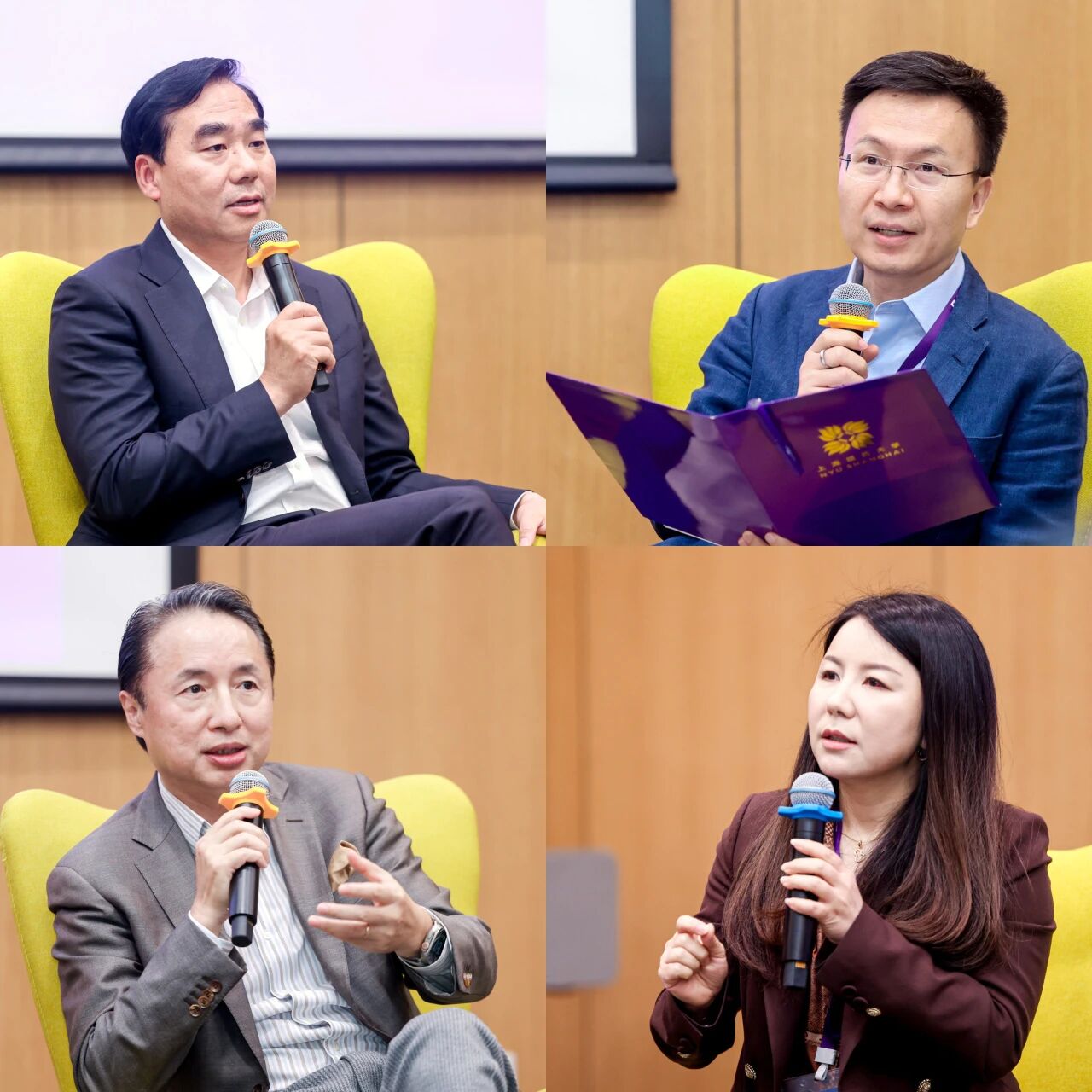
First row from left: Yisheng Zhou, Zhichao Chen; Second row from left: Xiaou Chen, Yanping Yu
With the ice-breaking pilot of commercial real estate REITs, the industry has arrived at its "coming-of-age ceremony." Moderated by Yisheng Zhou, Co-head Professor at NYU Shanghai and Co-founder of GoHigh Capital, this dialogue integrated perspectives from regulators, investment banks, and international capital. Yanping Yu, Head of REITs at China Securities, pointed out that the financial structuring of commercial property REITs is far more complex than infrastructure assets, with its core relying on operational data transparency and compliance—acting as a stress test for asset maturity. Zhichao Chen, CEO of Tishman Speyer China, noted from a global viewpoint that REITs do not function as a universal exit channel but rather as a "touchstone" for assets; a property must first be recognized as a premium asset by the public market before securitization can be evaluated. Xiaou Chen, Chairman of Farsighted Asset Management, highlighted the significance of the Pre-REITs stage, noting that excess returns frequently materialize before the public market recognizes the asset value. This shift represents not merely an iteration of financial instruments but a comprehensive restructuring of operational discipline for China's stock assets.
The Asset Management Landscape Under the Convergence of Digitalization and Green Technologies: Data Rights, Balance Sheet Integration, and Green Financialization
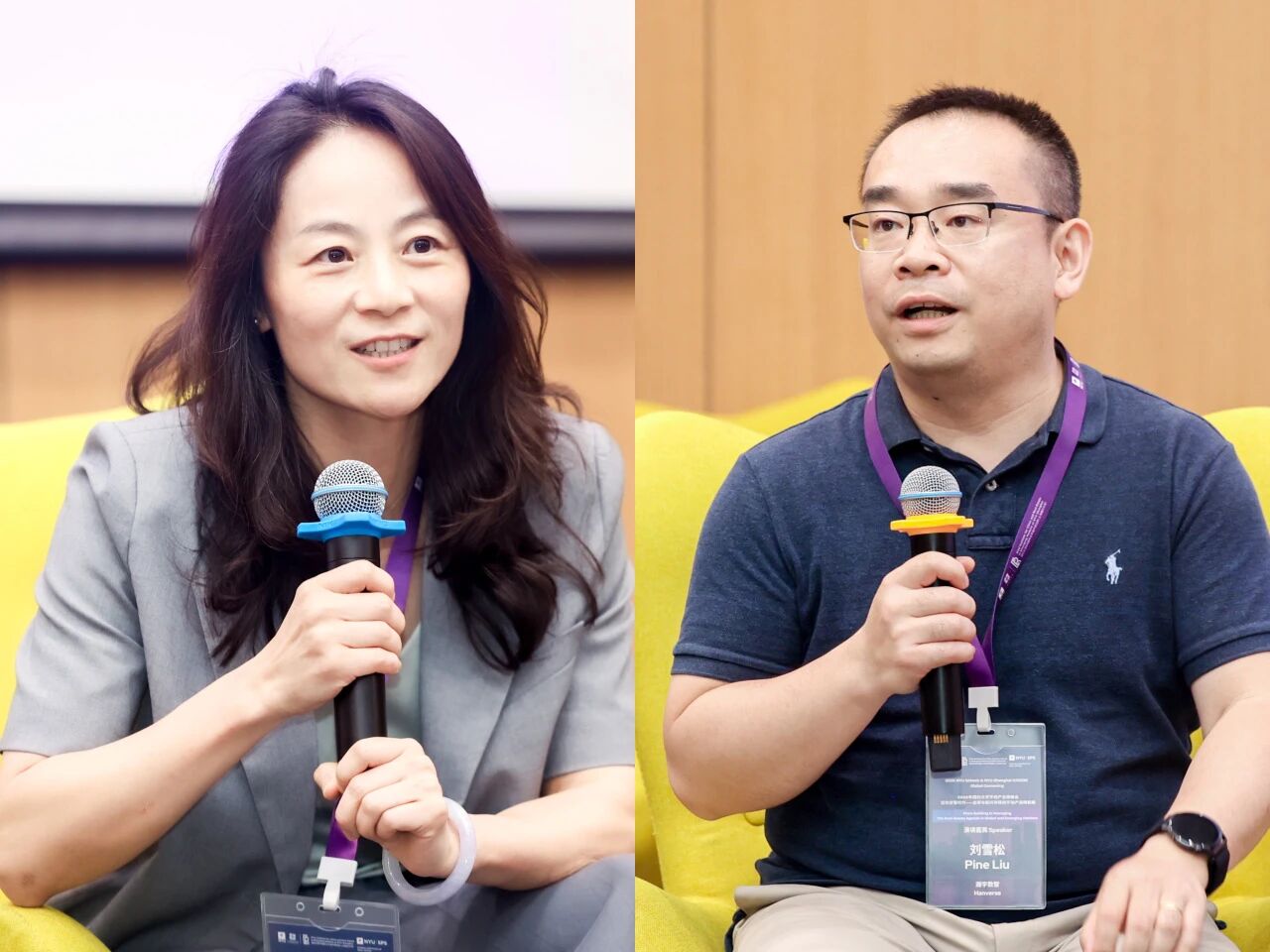
From left to right: Yaping Gao, Xuesong Liu
The convergence of digitalization and green technologies has emerged as a cutting-edge frontier in the real estate industry, with data becoming the third major factor of production following land and capital. Moderated by Xuesong Liu, Co-head Professor at NYU Shanghai and Co-founder of Hanyu Digital Intelligence, this panel directly addressed three prominent pain points of building data: difficulties in rights attribution, balance sheet integration, and financing. Yaping Gao, Equity Partner at Duan & Duan Law Firm, analyzed from a legal perspective that future data property rights must achieve "layered rights attribution" through contract design and data trusts. Xuesong Liu concluded that when energy consumption, carbon emissions, and behavioral data can be legally verified, quantified, and traded, traditional valuation models will be reshaped, propelling real estate asset management into a new era of digital existence.
Value Discovery and Asset Appreciation in the Stock Era
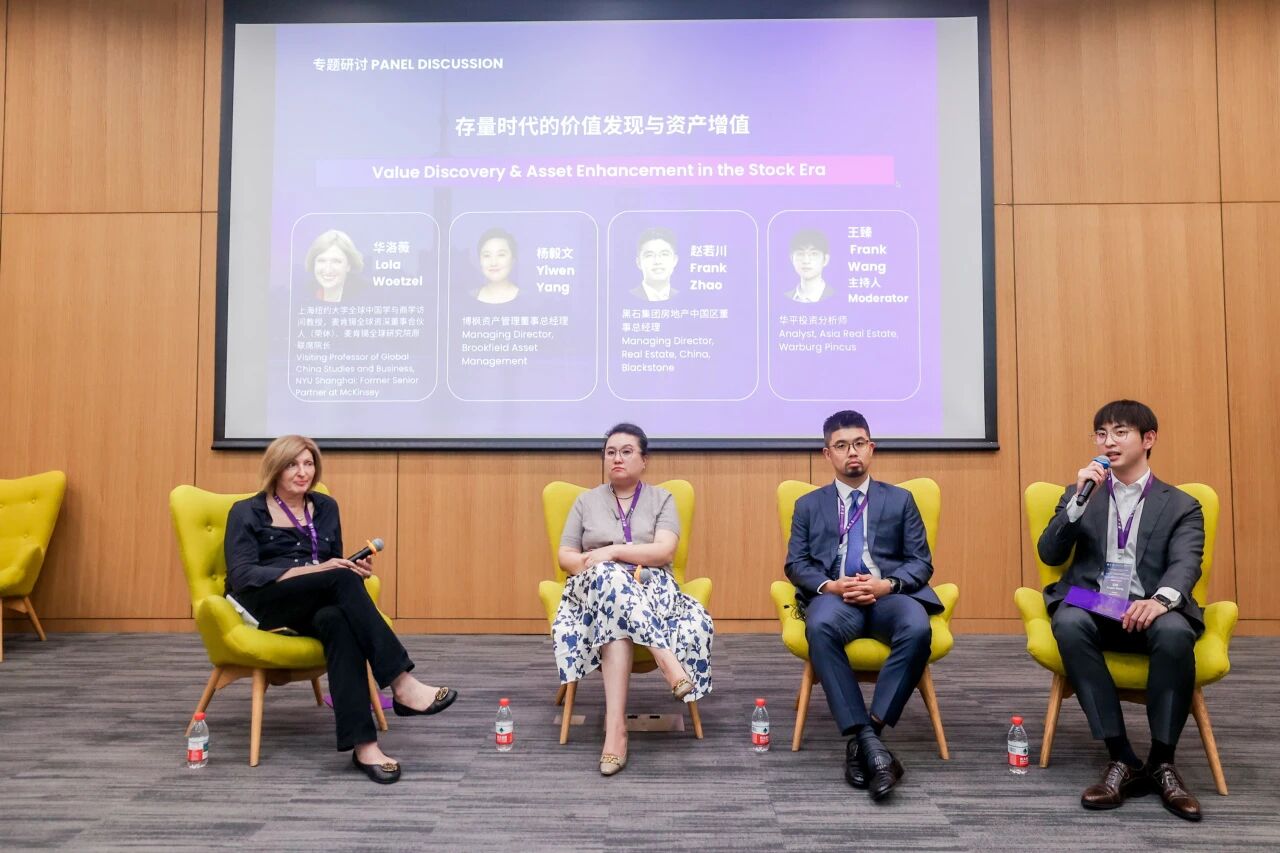
From left to right: Lola Woetzel, Yiwen Yang, Ruochuan Zhao, Zhen Wang
Moderated by Zhen Wang, Analyst at Warburg Pincus, this session focused on the hard metrics of stock assets: location, lease structures, operations and maintenance, and retrofitting capabilities. Lola Woetzel, Visiting Professor at NYU Shanghai and Senior Partner Emerita at McKinsey & Company, pointed out that the critical gap in the industry resides in "operating system capability," requiring a transition from relying on land appreciation to precision operations and capital discipline. Ruochuan Zhao, Managing Director of Real Estate China at Blackstone, emphasized that within the logistics and warehousing sector, investment should focus on hub assets backed by structural demand rather than short-term supply fluctuations. Yiwen Yang, Managing Director at Brookfield Asset Management, illustrated how an active cycle of "acquisition, retrofitting, green upgrading, and refinancing" can transform cost centers into value engines, noting that ESG investments have already demonstrated the capacity to enhance rental premiums. The discussion clearly revealed that the core competitiveness in the stock era lies not in purchasing assets at depressed prices, but in enabling them to traverse market cycles and continuously appreciate through sustained operations and optimization.
Dialogue on China’s Cycles and Global Practices
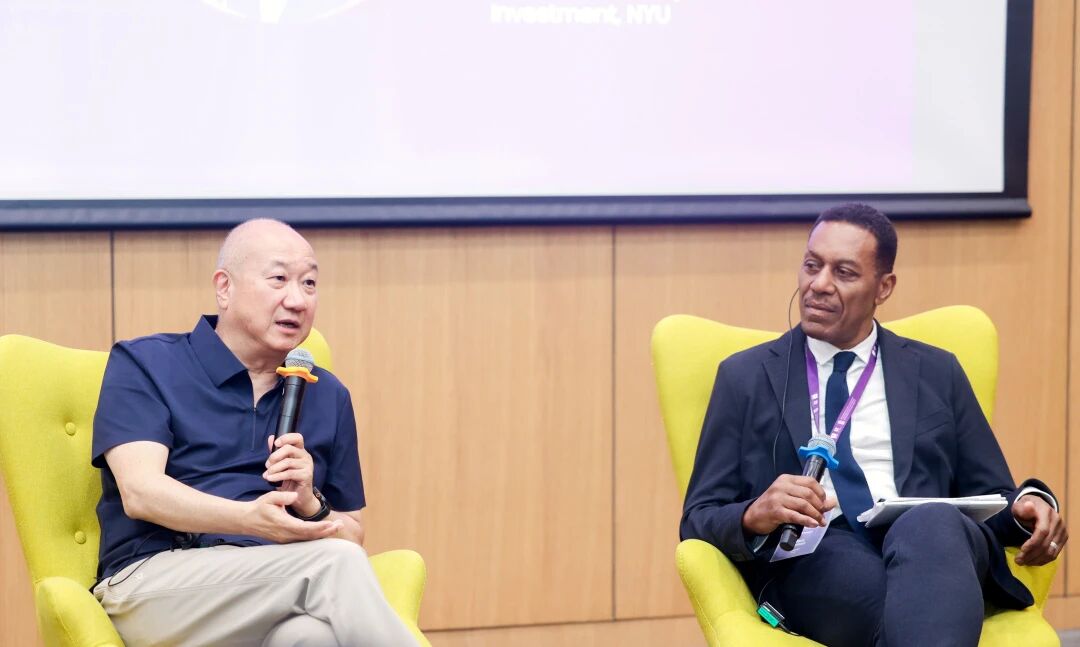
From left to right: Lun Feng, Marc Norman
Lun Feng, an iconic figure in Chinese real estate, Founder of Vantone Group, Chairman of Yufeng Capital, and Member of the NYU Board of Trustees, engaged in a fireside chat with Marc Norman, Dean of the NYU Schack Institute of Real Estate. The deep dialogue spanned macro judgments, practical case studies, and the future of the industry. Introducing his new book, The Authentic History of Real Estate, Lun Feng noted that Chinese real estate has entered the "post-development era," where the underlying logic is shifting from "relationship-and-resource-driven development" to "professional service-oriented asset management" focused on operations. Drawing upon his practical execution of the hundred-billion-yuan restructuring of Jinke Property, he detailed the "tactics" of utilizing trust mechanisms for asset carving and debt resolution. In response to the differing market environments of China and the US, he argued that "REITs + professional asset management" represents a vital trajectory but is not a panacea; the core remains the operational capacity of the asset itself. Marc Norman responded from a global perspective, stating that the ultimate manifestation of real estate is a profound fusion of finance, urban science, and the art of operations, with China’s transitional practices serving as a critical template for the global industry over the next decade. Both speakers agreed that the future of the industry lies not in waiting out market cycles, but in restructuring educational systems and capability models to cultivate composite talents capable of bridging the gap between "developers" and "asset managers."
Partner Insight Sharing
Following the main forum, a closed-door exchange featured a presentation by the chief partner, Inno Midtown. Representatives shared how this approximately 650,000 m² industry-city integration complex serves as a vivid practical template for stock district reconstruction and the rise of new growth poles through a "district-enterprise cooperation" model.
China’s real estate and urban development industries stand at a historic juncture, shifting comprehensively from "incremental expansion" to "stock optimization." A successful transformation will rely on the profound integration of financial innovation, precision operations, and technological sustainability, alongside the construction of an ecosystem encompassing academic research, professional education, and international dialogue. Together with all fellow travelers, we look forward to shaping a more resilient, value-driven, and people-centered urban future through professional dedication and open collaboration.
- 77 views