
LOUD Lab Student Wins 2026 ECNU Outstanding Master's Thesis Award
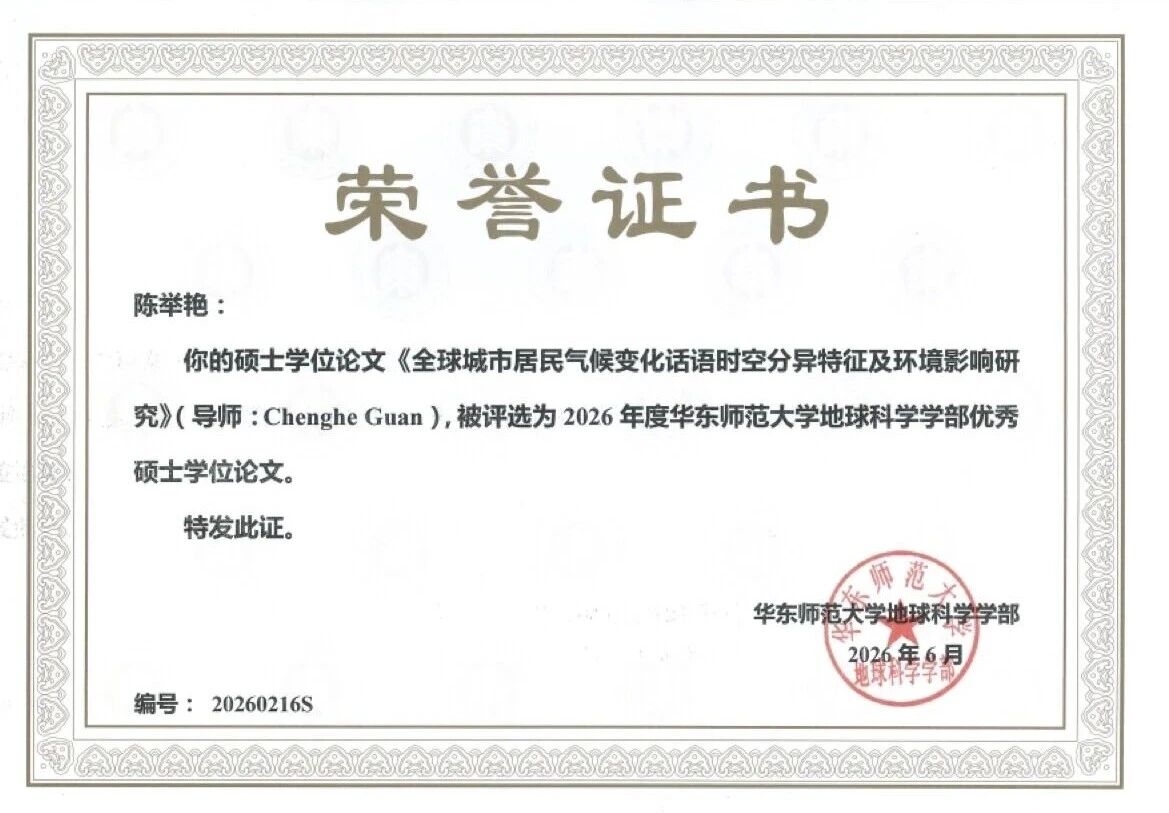
The master's thesis titled Spatio-Temporal Dynamics and Environmental Determinants of Global Urban Climate Change Discourses, authored by Juyan Chen (Class of 2026, M.S. in Urban Ecology), was selected as an Outstanding Master's Thesis for 2026 by the Faculty of Earth Sciences at East China Normal University. Juyan Chen is a Research Assistant at the Shanghai Key Laboratory of Urban Design and Urban Science (LOUD) and a master's student in the East China Normal University–NYU Shanghai Joint Graduate Training Program (N.E.T.), advised by Professor ChengHe Guan, Co-Founding Director of the LOUD Laboratory.

Juyan Chen
ECNU-NYU Shanghai
Joint Graduate Training Program (N.E.T.)
Class of 2026, M.S. in Urban Ecology
Why are residents in certain cities highly engaged in climate change discussions, while those in other cities remain relatively silent? Do the physical environments, ecological conditions, and socioeconomic contexts of cities condition how the public engages with climate issues? As global climate change continues to escalate, social media has emerged as a crucial platform for the public to articulate climate perceptions and deliberate on environmental agendas. Nevertheless, whether systematic spatio-temporal variations exist in urban climate discourses globally, and what mechanisms drive their formation, remains insufficiently investigated.
To address this gap, Chen systematically analyzed the spatio-temporal dynamics, topic-sentiment coupling structures, and environmental determinants of global urban climate discourses utilizing large-scale geolocated data from the global social media platform Twitter, providing a novel empirical perspective on the nexus between public climate perception and urban environments in the digital era.
Compared to conventional survey methods, social media passively and continuously records public engagement and sentiments regarding climate change. The study compiled climate-related tweets posted between December 2021 and March 2023, processing 318,277 raw entries to filter a final sample of 104,274 valid tweets, of which 56,556 contained geotagged information across 197 countries and 1,176 cities globally. Deploying both a Lexicon-based Method (LBM) and a Pre-trained Language Model (PLM) for sentiment classification, the study constructed a city-month scale climate discourse database. Integrating sentiment analysis, topic modeling, Large Language Model (LLM) semantic identification, and inferential statistics, the research conducted a systematic examination of public climate expressions across global urban areas.
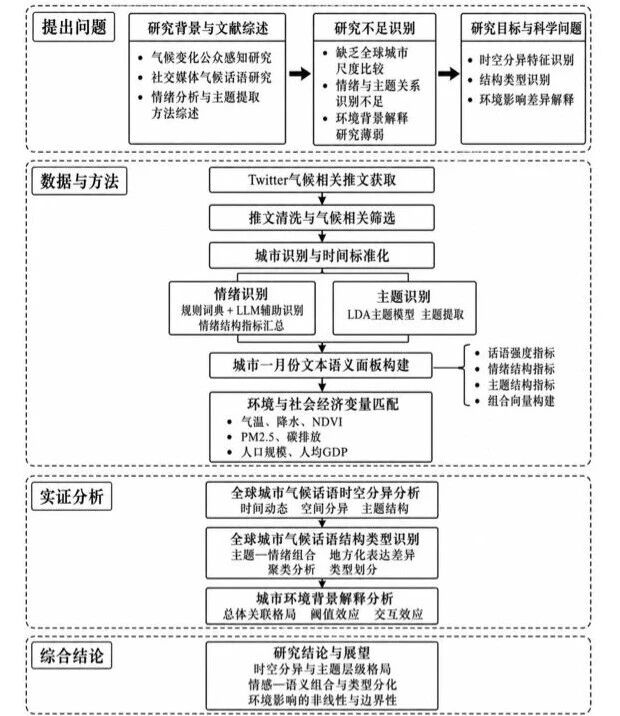
Figure 1: Methodological Framework of the Study
The core findings of this study include:
-
Global urban climate discourses exhibit pronounced event-driven characteristics. Time-series analysis of 104,274 valid climate tweets from December 2021 to March 2023 indicates that major external shocks—such as COP summits, IPCC assessment report releases, and European heatwaves—triggered short-term surges in tweet volumes accompanied by noticeable drops in sentiment. Monthly sentiment trajectories reveal that extreme-sentiment tweets remained stable between 10% and 15%, experiencing minor escalations of 2 to 3 percentage points surrounding major events. Overall, while international climate conferences, evaluation report releases, and extreme weather events systematically catalyzed public discussion density and emotional fluctuations, the broader sentiment structure maintained structural stability dominated by neutral expressions, exhibiting an "event-driven, bounded-fluvariation" pattern.
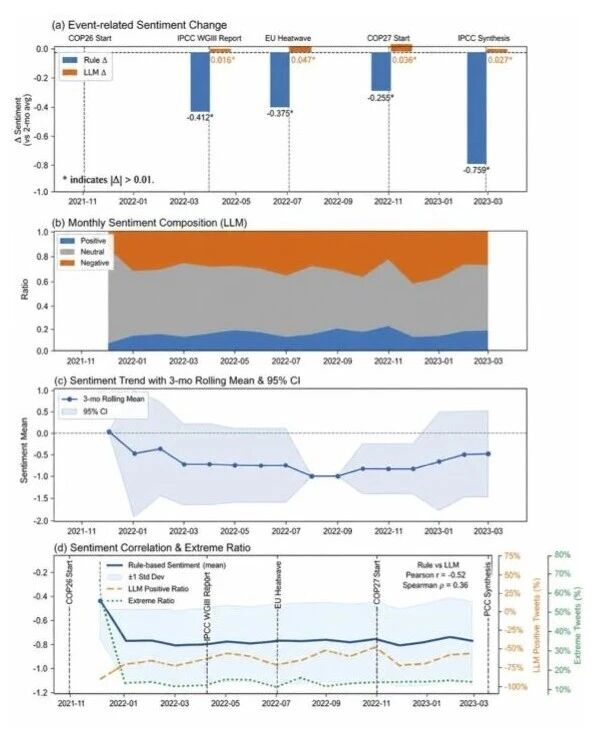
Figure 2: Temporal Evolution of Sentiment and Event-Correlated Variations in Climate Discourses on Twitter
-
Significant spatial heterogeneity persists across different cities. The empirical sample encompasses 1,176 cities across 197 countries, with geotagged tweet densities in North American and European cities substantially surpassing those in Africa, South America, and Southeast Asia. Spatial statistics show that the proportion of extreme sentiment remained below 0.3 in most cities, exceeding 0.6 in only a few instances; thematic focus in North American and European cities gravitated toward international policy, whereas many Asian and African cities focused heavily on local adaptation efforts. Urban areas exhibited marked divergence in discussion activity, sentiment polarity, and extreme sentiment ratios, yielding a spatial configuration characterized by dense spatial clustering in Western cities and fragmented, localized clustering alongside regional polarization in the Global South.
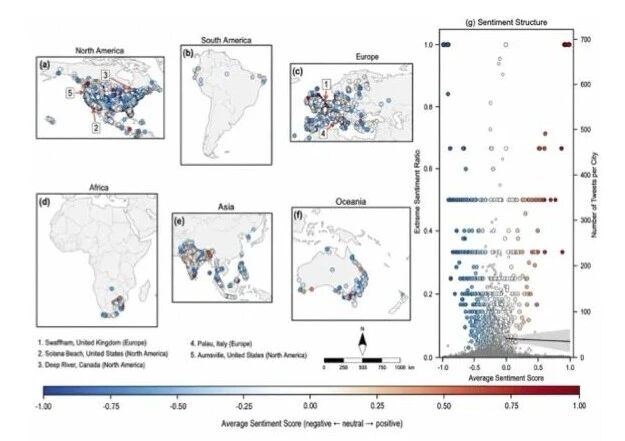
Figure 3: Global Spatial Distribution of Urban Sentiments and World Regional Structural Characteristics
-
Global urban climate discourses are persistently dominated by a small set of core topics. Latent Dirichlet Allocation (LDA) topic modeling identified 12 climate topics, with Topic 12 accounting for an average share of 18.62%, followed by a second tier comprising Topic 10, Topic 3, and Topic 11, while remaining topics each constituted under 6%. Core issues consistently dominated mainstream discourses, yet sentiment assignments for identical core topics varied significantly across continents, undergoing localized restructuring aligned with municipal development contexts and risk profiles. Utilizing 56,556 geotagged tweets to construct 12-dimensional topic-sentiment coupling vectors, K-means clustering identified eight archetypal urban climate discourse patterns globally: Skeptical-Critical, Adaptive-Action, High-Activity Ambiguous, Moderate-Advocacy, Risk-Vigilant, Implicit-Passive, Negative-Polarized, and Governance-Anxious. The results demonstrate that cities diverge not only in topic distributions identified by the LDA model ("what is discussed"), but also in emotional expression modes captured by average sentiment and extreme sentiment proportions ("how it is discussed").
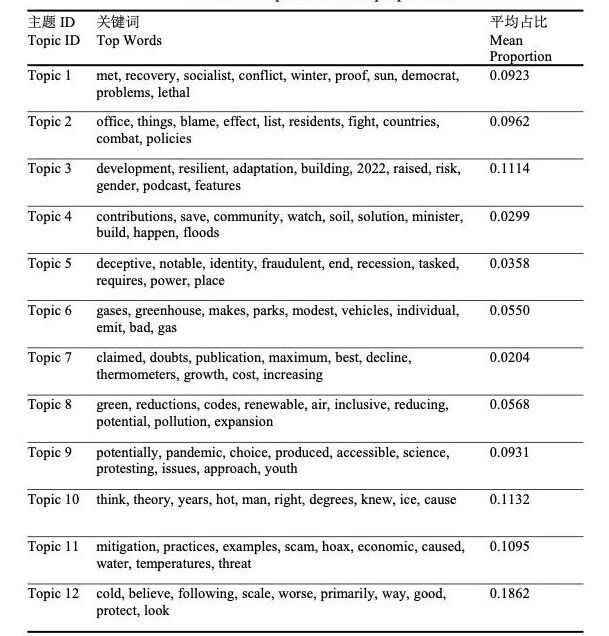
Table 1: Topics and Mean Proportions
The research further evaluated the influence of urban natural environments, air pollution, vegetation cover, population size, and carbon emissions on public climate discourses. The empirical findings indicate statistical associations between urban environmental contexts and climate discourses, though overall explanatory power remains bounded. Compared to short-term environmental fluctuations, population size and baseline long-term environmental contexts exerted a stronger conditioning effect on activity levels and expression modes; controlling for city and time fixed effects significantly attenuated the influence of environmental variables. This indicates that public climate expressions are conditioned not merely by real-time physical environments, but jointly by long-term urban development baselines, socioeconomic environments, and communication networks.
By integrating natural language processing, large language models, topic modeling, and urban environmental datasets, Chen’s research establishes a multi-scalar framework for climate discourse analysis across global cities. It unveils the mechanisms through which international climate agendas, digital platforms, and local socioeconomic environments jointly shape public climate expressions, providing novel scientific evidence for optimizing urban climate communication and public engagement strategies, as well as a fresh analytical framework for urban environmental governance and climate communication in the digital era.
- 55 views